
What if loving the sun was the healthy choice?
The research is clear: sunlight is essential for your health. But UV generates oxidative stress. Photonutrition lets you meet the sun responsibly — supporting your skin from within.
Plant-based carotenoids that build UV resilience from within — and give your skin a natural warm tone that people notice.

We need sunlight. But UV does generate oxidative stress — free radicals that damage collagen and DNA. Photonutrition bridges that gap. Plant-based carotenoids accumulate in your skin tissue, neutralizing UV-generated free radicals at the cellular level. Enjoy the sun. Support your skin from within.
7 Reasons We Need Sunlight
And why photonutrition changes everything.
93% of your life is spent indoors.
Americans spend an average of 93% of their time inside buildings or vehicles, according to the U.S. Environmental Protection Agency. Only about 3.7 hours per day is spent outdoors. Since the 1970s, time spent outside has dropped 14% — and for people under 30, the decline is even steeper at 20%. Meanwhile, average screen time has climbed to over 7 hours per day. Our bodies evolved under open sky. We're living under fluorescent light.
U.S. Environmental Protection Agency · Statista time-use analysis
Vitamin D deficiency has exploded 490% in 20 years.
Between the 2000s and 2010s, primary vitamin D deficiency diagnoses increased by 490%. Nearly two-thirds of Americans are now deficient, and almost 90% of U.S. adults fall below the recommended range of 40–60 ng/ml. This isn't a coincidence — the drop in outdoor time directly correlates with the deficiency spike. Vitamin D is essential for immune function, bone health, and disease prevention. Your body synthesizes it through one mechanism: sunlight on skin.
NHANES data · The American Journal of Clinical Nutrition, 2025
Sunlight triggers beta-endorphins — the same chemistry as a runner's high.
When UV light hits your skin, it triggers the production of beta-endorphins — the same opioid-like chemicals responsible for the euphoria after intense exercise. Research published in Cell and covered by Harvard Medical School found this creates a measurable pleasure response, not just a psychological preference. That feeling of contentment sitting in the sun? It's your skin producing its own feel-good chemistry. Your body is literally designed to seek sunlight.
Cell, 2014 · Harvard Medical School
Regular sun exposure is associated with up to 38% greater longevity.
A Swedish study followed 30,000 women for 20 years and found that those who regularly spent time in the sun had significantly lower mortality rates than those who avoided it. Sun avoiders had higher rates of cardiovascular disease and other causes of death. The researchers concluded that avoiding sun exposure is a risk factor for death of a similar magnitude to smoking. That's not a wellness blog — that's epidemiology.
Journal of Internal Medicine · Harvard Health
Morning sunlight resets your sleep, mood, and hormones.
Sunlight exposure before 10 AM acts as the primary signal — called a zeitgeber — that resets your circadian clock. This regulates melatonin production at night for better sleep, lifts serotonin levels during the day for mood stability, and synchronizes hormonal cycles. A 2025 study in BMC Public Health confirmed that morning light exposure is the single most impactful factor for sleep quality. Not supplements. Not sleep apps. Sunlight.
BMC Public Health, 2025 · Circadian rhythm research
Your blood pressure drops in the sun — and stays lower for days.
UVA exposure triggers the release of nitric oxide from your skin — a molecule that relaxes and widens blood vessels, lowering blood pressure. Research published in Nature Scientific Reports found this effect persists for days after exposure, in what scientists call the “Dark Reaction.” Population blood pressure is consistently 6 mmHg higher in winter, a shift directly linked to a 23% increase in cardiovascular deaths during darker months.
Nature Scientific Reports, 2023 · Cardiovascular research
So why were we told to hide from it?
For decades, the message was simple: the sun is dangerous, stay inside, cover up. But the research tells a more nuanced story. Complete sun avoidance carries its own health costs — costs measured in vitamin D deficiency, cardiovascular risk, sleep disruption, and reduced longevity. The answer isn't hiding from the sun. It's supporting your body to handle it. That's what photonutrition does — plant-based carotenoids that accumulate in your skin tissue, building internal antioxidant defense so you can meet sunlight responsibly. Your skin type affects how you respond to UV. But every skin type benefits from internal antioxidant support — just like every skin type benefits from SPF. The answer isn't avoiding the sun. It's supporting your body to handle it. Not blocking the sun. Living with it.
5 Compounds. 1 Daily Ritual.
Comprehensive carotenoid support typically requires five separate bottles. Each at clinical doses, each from a different brand.
Research shows multiple carotenoids at lower doses outperform a single megadose ingredient — with better safety and broader coverage across skin layers.
Results That Build. Month by Month.
5 Peer-Reviewed Studies
Among 25+ published clinical trials across 7 countries on human subjects.
Astaxanthin is 6,000x more potent than vitamin C in neutralizing UV free radicals.
Measured in singlet oxygen quenching. Also 550x more potent than vitamin E.
Nishida et al., Carotenoid Science, 2007
Lycopene increased skin's UV resilience by 43% over 12 weeks.
Subjects' skin handled significantly more UV before redness. Built gradually with daily use.
Journal of Photochemistry & Dermatological Science, 2023
Meta-analysis: beta-carotene accumulates in skin month over month.
Measurable photoprotective effects increase with consistent supplementation.
Köpcke & Krutmann, Photochemistry & Photobiology, 2008
Multiple carotenoids at lower doses outperform a single megadose.
Mixed carotenoid supplementation provided comparable photoprotection with better safety and broader coverage across skin layers. The compounds work as a network.
Baswan et al., Photodermatology, 2020
Annatto tocotrienols outperform conventional vitamin E as antioxidants.
Annatto-derived delta-tocotrienol (90%) and gamma-tocotrienol (10%) showed superior antioxidant activity compared to alpha-tocopherol, with stable efficacy for daily supplementation.
Food Chemistry · University of Georgia research
What does this mean for you? It means you can stop choosing between loving the sun and protecting your skin. Photonutrition lets you do both — backed by more published research than any other oral sun care approach on the market.
Leading voices on why we need the sun — responsibly.
The science is clear: both excessive sun exposure and complete avoidance are harmful. The answer is meeting sunlight better.
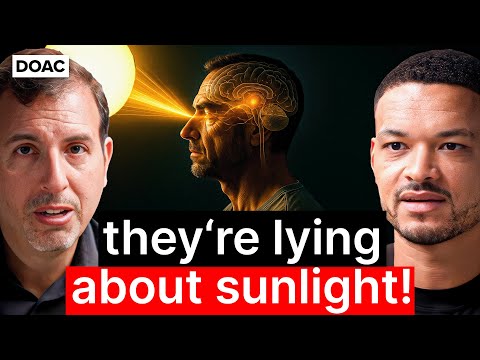
“The Dangerous Lie You’ve Been Told About Sunlight”
Dr. Roger Seheult · Diary of a CEO, 2025

“How to Improve Skin Health & Appearance”
Andrew Huberman · Huberman Lab, 2024
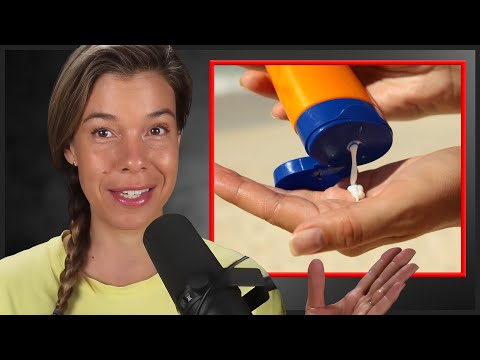
“You Should Know This About Sunscreen”
Dr. Rhonda Patrick · FoundMyFitness, 2024
We need the sun more than ever. And we need smarter ways to get it.
We've built our lives around screens and ceilings. The health consequences are measurable — vitamin D deficiency, disrupted sleep, cardiovascular risk, mood disorders. The research isn't telling us to fear the sun. It's telling us we need it more than we're getting. The health consequences are measurable — vitamin D deficiency, disrupted sleep, cardiovascular risk, mood disorders. The research isn't telling us to fear the sun. It's telling us we need it more than we're getting.
But UV does generate oxidative stress. That's real science, not fear. The European answer — for over a decade — has been to combine topical SPF with internal photonutrition. Protect the outside. Support the inside. Enjoy the sun without the guilt.
That's the approach we built GLOW around.
I used to fear the sun. Now I support my body to handle it.
I spent a decade in the supplement manufacturing industry. When I discovered photonutrition while traveling in Europe — the practice of using plant-based carotenoids to support skin from within — everything changed. I realized you don't have to choose between loving the sun and caring for your skin.
GLOW took two years to formulate. Five compounds at doses informed by published studies. Cold-processed to preserve what heat manufacturing destroys. No tyrosine. No copper. No preformed retinol. 100% beta-carotene — the form your body self-regulates. Reviewed and approved by medical professionals at our manufacturing facility.
— Elsha Kim, Founder
Sources & Published Research
Real people. Real results.
Meet the sun better.
Five clinically studied compounds. Cold-processed. 100% beta-carotene. Built for people who love the sun and care about their health.
Try GLOW — 40% Off First MonthBRONZEBODY®
For people who love the sun and care about their health.
These statements have not been evaluated by the Food and Drug Administration. This product is not intended to diagnose, treat, cure, or prevent any disease. GLOW is not a sunscreen and does not replace topical UV protection.
© 2026 Bronzebody LLC · Los Angeles, CA